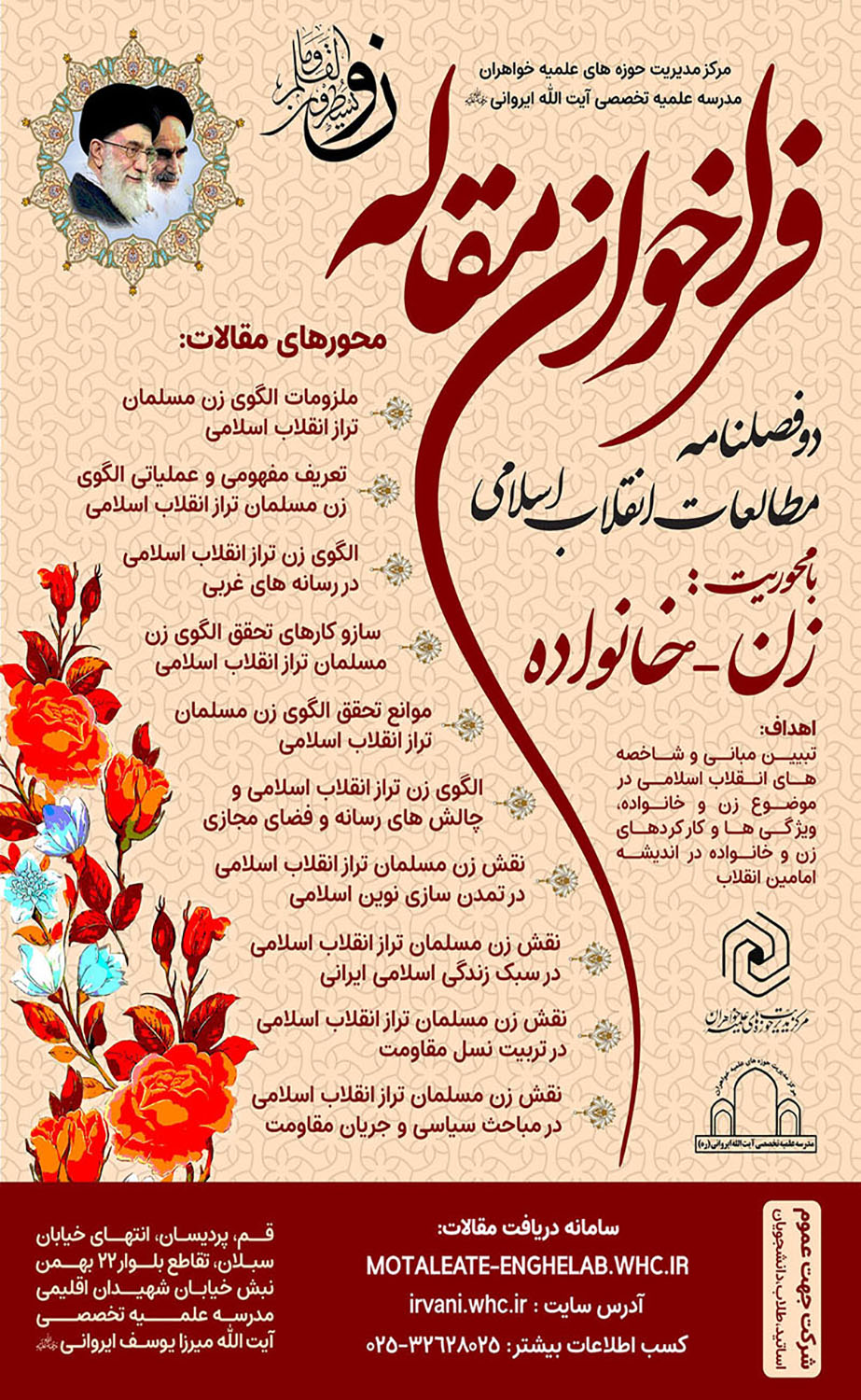
دو فصلنامه مطالعات انقلاب اسلامی  (زن و خانواده)

دو فصلنامه مطالعات انقلاب اسلامی (زن و خانواده)

زن ایرانی در جنگ تحمیلی سوم، تبلوری از تمدن اسلامی

نوع مقاله : مقاله پژوهشی

نویسنده
دانشجوی دکتری، تاریخ اسلام دانشگاه باقرالعلوم قم، ایران.
چکیده
جکیده

پس از افول نظم دوقطبی و تداوم سلطه غرب در صورت‌های نوین استعماری، انقلاب اسلامی با طرح «الگوی سوم زن»، مسیری تمدنی برای عاملیت اجتماعی زنان گشود. این پژوهش با نگاهی تمدنی و با تمرکز بر جنگ تحمیلی سوم به‌عنوان عرصه‌ای از نزاع تمدنی، در پی بازشناسی ابعاد کنشگری زن ایرانی در مقام پیشران این الگوست. روش پژوهش، کیفی و مبتنی بر تحلیل گفتمان رهنمودهای امام خامنه‌ای شهید و مشاهده تحلیلی میدانی نقش‌آفرینی زنان در ساحت‌های صبر و مقاومت، زندگی در خیابان و افسری جنگ نرم است. یافته‌ها نشان می‌دهد که زن ایرانی در این نبرد نامتقارن، با تلفیق مادری، تاب‌آوری اجتماعی و جهاد تبیین، کارویژه‌های تمدنی جدیدی را رقم زده و سبک نوینی از مبارزه را در برابر نظام سلطه عرضه کرده است. نتیجه آنکه این کنشگری چندبُعدی، تبلور عینی «معماران ایران جدید» و رونمایی از بلوغ سیاسی-اجتماعی زن تراز انقلاب اسلامی در طرح کلان تمدن اسلامی است..
واژگان کلیدی: زن مسلمان ایرانی، تمدن اسلامی، جامعه سازی، جنگ تحمیلی سوم.
کلیدواژه‌ها
موضوعات

عنوان مقاله English

The Iranian Woman in the Third Imposed War: A Manifestation of Islamic Civilization

نویسنده English

Saeideh Rahimi
Doctoral StudPh.D. Candidate, History of Islam, Baqir al-Oloom University, Qom, Iran.ent
چکیده English

Abstract

Following the decline of the bipolar order and the persistence of Western hegemony in new colonial forms, the Islamic Revolution, by introducing the "third model of woman," opened a civilizational path for women's social agency. Adopting a civilizational perspective and focusing on the Third Imposed War as a site of civilizational contestation, this research seeks to delineate the dimensions of Iranian women's agency as the driving force of this model. The methodology is qualitative, based on discourse analysis of Imam Khamenei's directives and analytical field observation of women's performative roles in forbearance and resistance, Presence in the streets, and soft-war officership. Findings show that in this asymmetrical warfare, Iranian women, through synthesizing motherhood, social resilience, and the jihad of clarification, have generated novel civilizational functions and introduced an innovative mode of struggle against the hegemonic order. It is concluded that this multi-dimensional agency concretely embodies the architects of the new Iran and reveals the socio-political maturity of the woman aligned with the Islamic Revolution within the grand project of Islamic civilization.

Keywords: Islamic civilization, society‑building, Third Imposed War, Muslim Iranian woman

کلیدواژه‌ها English

Keywords: Islamic civilization
society‑building
Third Imposed War
Muslim Iranian woman