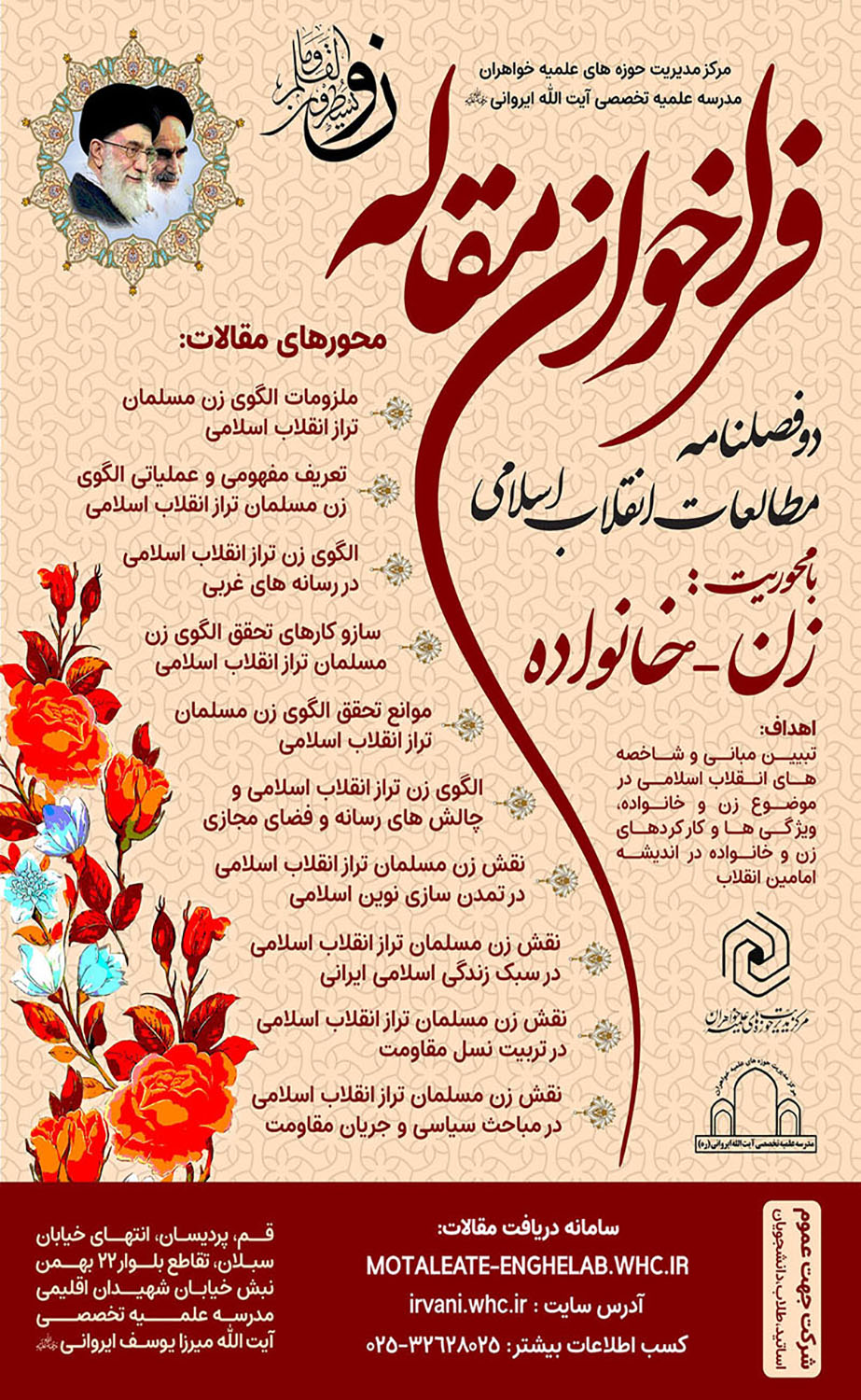
دو فصلنامه مطالعات انقلاب اسلامی  (زن و خانواده)

دو فصلنامه مطالعات انقلاب اسلامی (زن و خانواده)

الگوهای خانواده تراز انقلاب اسلامی به‌عنوان نهاد تولید و بازتولید

نوع مقاله : وِیژه نامه جنگ رمضان و مقاومت

نویسندگان
1 استادیار گروه معارف اسلامی دانشگاه قم، ایران
2 استاد، پژوهشگر،گروه معارف اسلامی، دانشگاه آزاد اسلامی، واحد شهرقدس، تهران ایران
چکیده
چکیده
خانواده به‌عنوان بنیادی‌ترین نهاد اجتماعی، نقش تعیین‌کننده‌ای در انتقال ارزش‌ها و بازتولید فرهنگ درجوامع ایفا می‌کند. پژوهش‌ حاضر با هدف شناسایی الگوهای خانواده تراز انقلاب اسلامی در فرآیند تولید و بازتولید فرهنگ مقاومت انجام شده است. این پژوهش از نظر هدف کاربردی-توسعه‌ای و از نظر روش، کیفی با رویکرد تحلیل مضمون است. یافته‌های پژوهش نشان داد که خانواده تراز انقلاب اسلامی بر سه مضمون فراگیر و به‌هم‌پیوسته خانواده بینش‌مدار، خانواده هویت‌بخش و خانواده کنش‌گر استوار است. در این الگو، بینش موجب شکل‌گیری آگاهی و بصیرت، هویت موجب تقویت تعلق و حافظه فرهنگی، و کنش موجب تبدیل ارزش‌ها به رفتار اجتماعی می‌شود. همچنین مطالعه موردی خانواده‌های معظم شهدا نشان داد که این سه مؤلفه در قالب تقید اعتقادی، انتقال بین‌نسلی ارزش‌ها، ایثار آگاهانه، مسئولیت‌پذیری اجتماعی و مشارکت فرهنگی تجلی یافته است. بر این اساس، خانواده تراز انقلاب اسلامی را می‌توان نهادی راهبردی در بازتولید فرهنگ مقاومت و انتقال پایدار ارزش‌های دینی و انقلابی به نسل‌های آینده دانست.
کلیدواژه‌ها
موضوعات

عنوان مقاله English

The Islamic Revolution Model Family as an Institution for the Production and Reproduction of Resistance Culture: A Study of Martyrs’ Families

نویسندگان English

Narges Mosaibi Sari 1
Davoud feyzafra 2
1 Assistant Professor, Department of Islamic Studies, University of Qom، Iran.
2 Instructor, researcher, Department of Islamic Studies, Islamic Azad University, Shahriyar (Shahri Qods) Branch, Tehran, Iran
چکیده English


Abstract


The family, as the most fundamental social institution, plays a decisive role in transmitting values and reproducing culture in societies. This research aims to identify patterns of the family aligned with the Islamic Revolution in producing and reproducing resistance culture. This applied-developmental study uses a qualitative method with a thematic analysis approach. Findings reveal that this family model rests on three interconnected themes: the insight-oriented family, the identity-building family, and the active family. In this framework, insight generates awareness and discernment, identity reinforces belonging and cultural memory, and action transforms values into tangible social behavior. A case study of the families of martyrs demonstrated that these three components are manifested through religious commitment, intergenerational transmission of values, conscious sacrifice, social responsibility, and active cultural participation. Accordingly, the family aligned with the Islamic Revolution can be regarded as a strategic institution in reproducing the culture of resistance and sustainably transmitting religious and revolutionary values to coming generations.


Keywords: Thematic Analysis, Family Aligned with Islamic Revolution, Martyrs' Families, Islamic Lifestyle, Resistance Culture

کلیدواژه‌ها English

Keywords: Thematic Analysis
Family Aligned with Islamic Revolution
Martyrs' Families
Islamic Lifestyle
Resistance Culture